This first lab in Object was made to introduce us students to the basics of circuitry and electronics by using thread boards, breadboards, and LEDs, among other supplies. This lab spanned two weeks, and as such the documentation will be split up into two parts.
Week One: Thread Boards
Week one focused around building circuits on a thread board. Other supplies used were string, LEDs, and 2V batteries. I experimented with different numbers of batteries, numbers and colors of LEDs, and string paths to create different circuits.
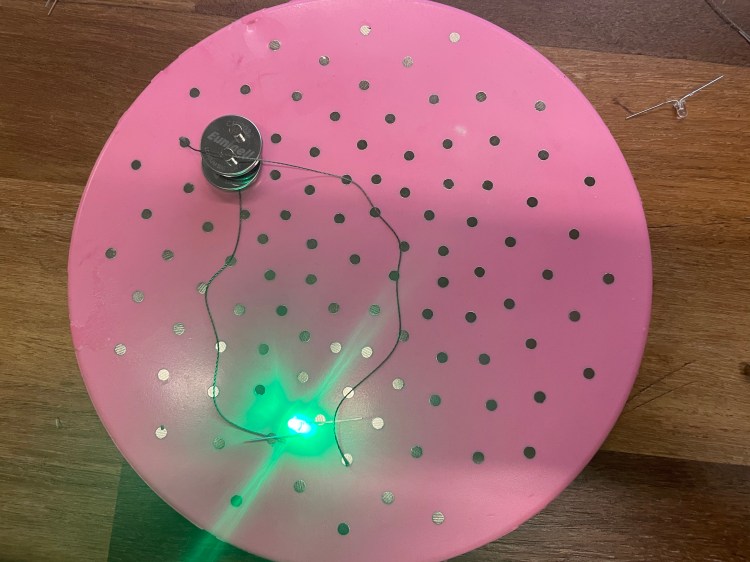
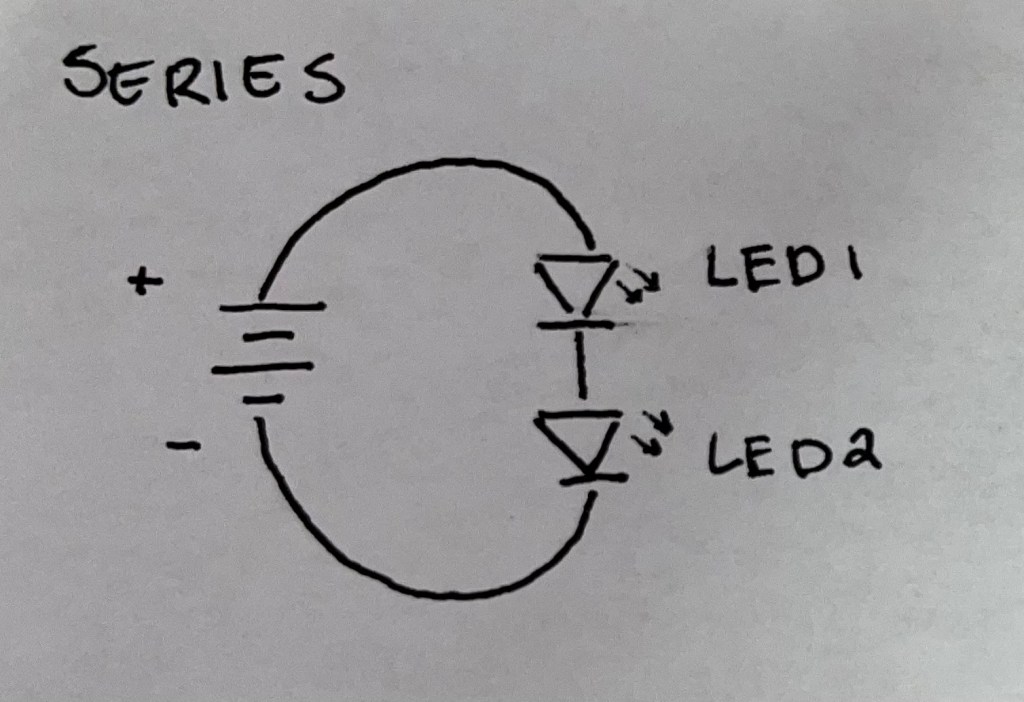
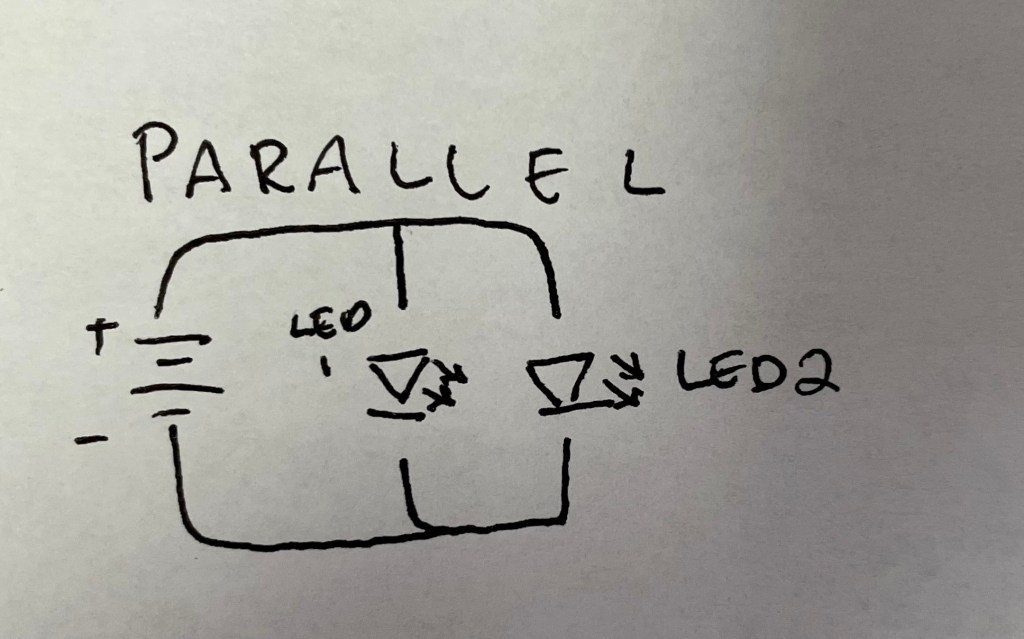
The challenge of the week was to build two circuits: one where the LEDs were in series and another where the LEDs were parallel. When building both circuits, I found that when in parallel, both LEDs were significantly brighter than they were when they were put together in a series. In addition, if colors of LEDs that were closer to red on the visible light spectrum were used in a combination with colors that were closer to purple on the visible light spectrum, all of the current in the circuit would go through the LEDs whose colors were closer to red, and the LEDs whose colors were closer to purple would not turn on.
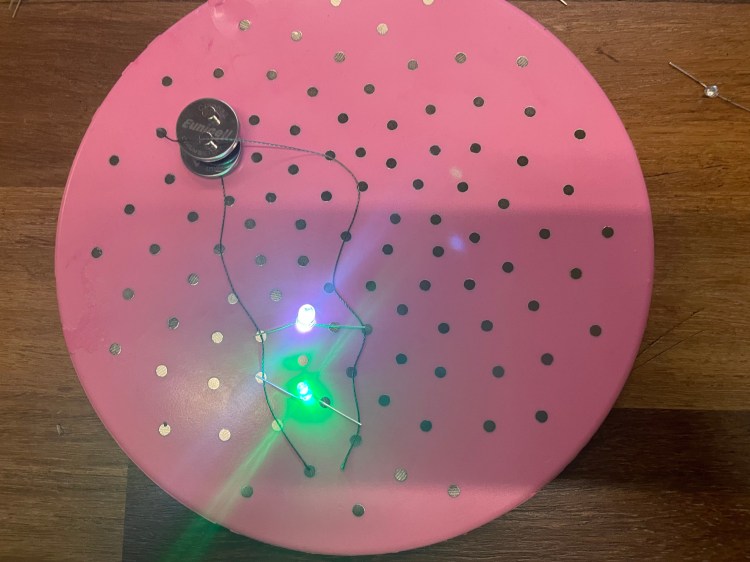
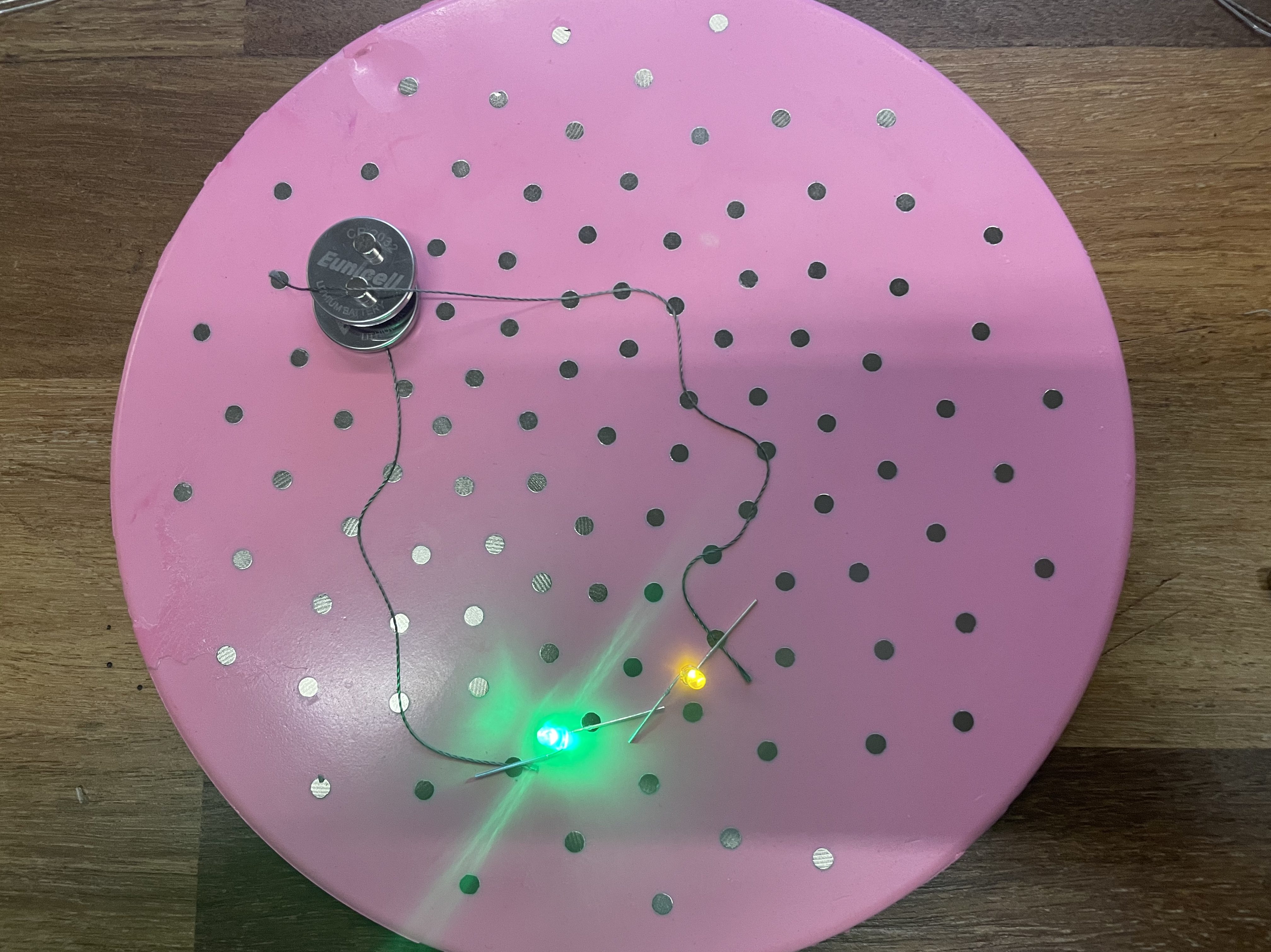
My biggest takeaway from the first week of this lab was that different LED colors need different amounts of current to light up, more specifically it seems that colors that are closer to red on the spectrum of visible light need less current than colors closer to purple on the visible light spectrum, and white LEDs need the most current overall.
Week Two: Bread Boards
Week two was a step up, as we started to use bread boards. I had never used a bread board before, and it took some getting used to in order to figure out where each piece was connected. This week, it was really important to draw out circuit diagrams, as they made it far easier to find out where components should go on the bread board.
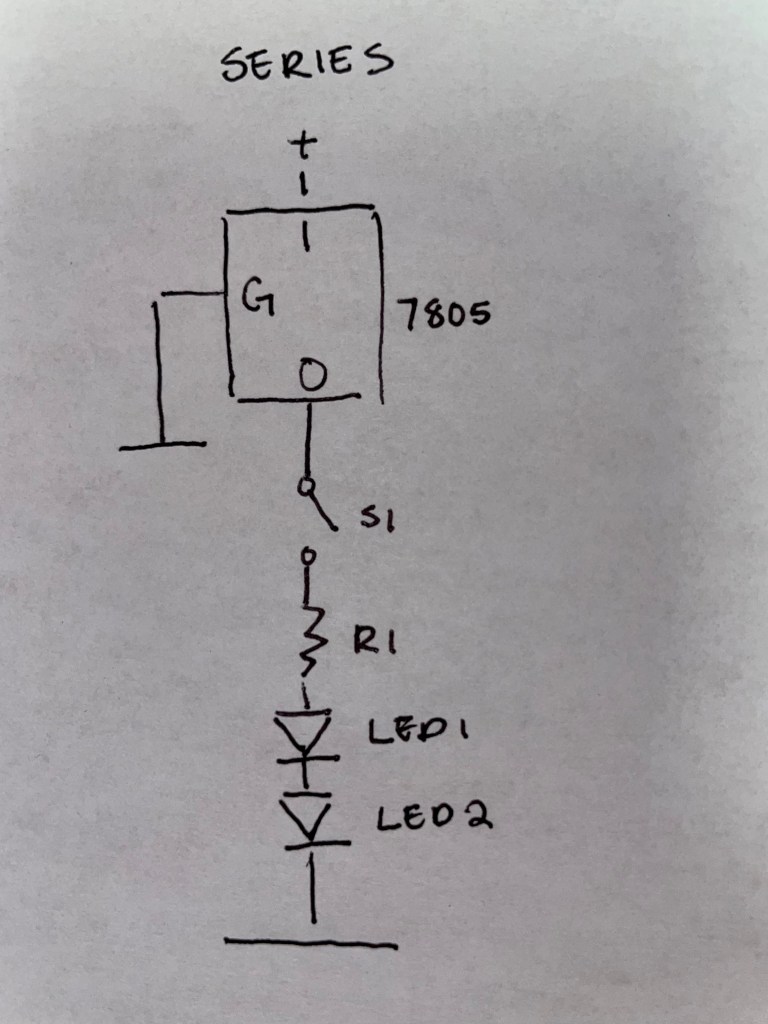
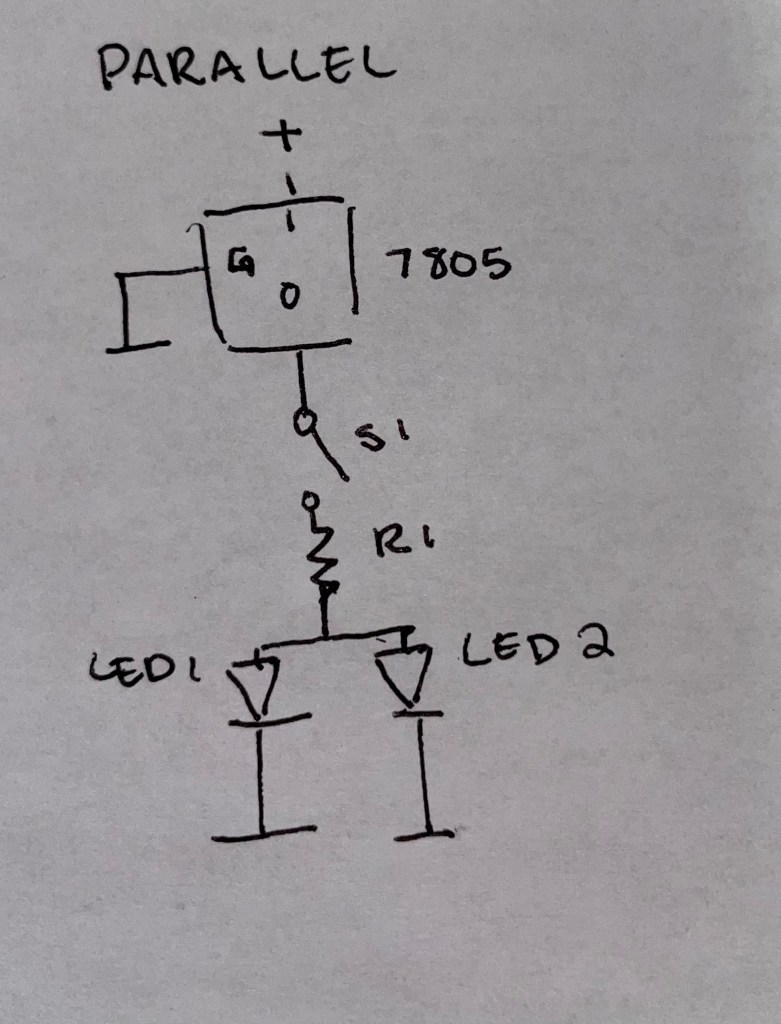
The math of Ohm’s law was also introduced in this week’s lab, as a resistor was needed to protect the LEDs on the circuit. We calculated resistance using the formula of R=V/I, and while the resultant needed resistances of the parallel and series circuits were different, a 47-ohm resistor was used in both instances due to the fact that it was the resistor available in class which had a resistance closest to both calculated numbers.
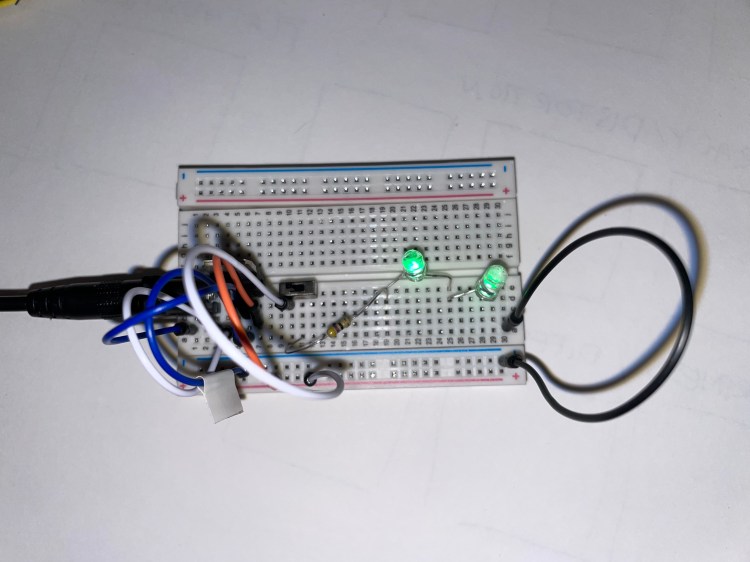
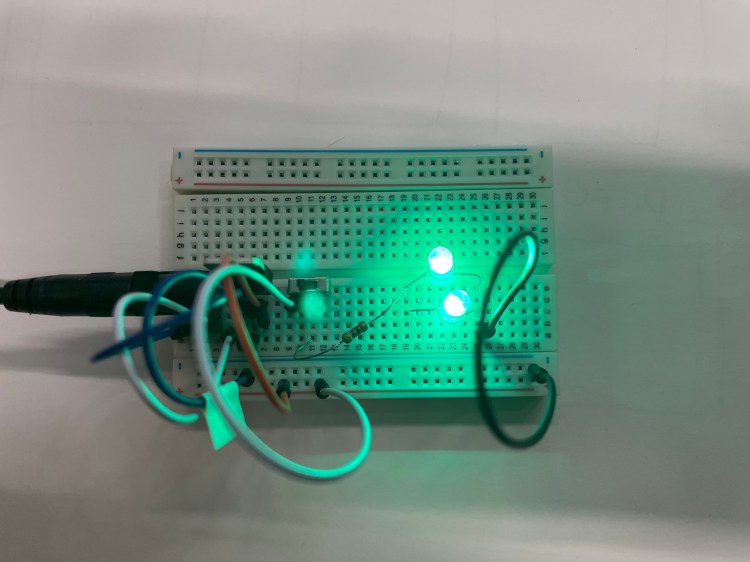
This week of lab solidified my findings from the first week, as I found that each color of LED has a different forward voltage and thus needs a different current to run through it in order for the LED to light up.
 Cayla Kennedy